

Driven by the desire to enlighten through his literary works, Xlibris Author Robert Colacurcio shares his writing motivation and his self-publishing experience here on the Xlibris Blog.
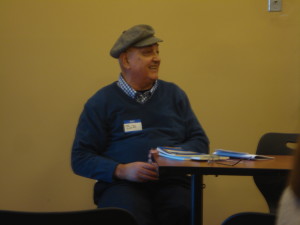
The prolific writer has written and published through Xlibris 12 books to date and classifies them as “Applied Spirituality.” With his gift of words, Robert does not wish for commercial success but for his readers to derive significant learning from his books.
Read on to learn more about Robert and his works.
About the Xlibris author
Robert Colacurcio has been involved in spiritual work since 1960 when he entered the Jesuit monastic order and studied to become a priest, until he left the order in 1971. He earned his doctorate in philosophy at Fordham University. He practiced Zen meditation at the New York Zendo while becoming deeply involved in the Human Potential Movement studying under Claudio Naranjo and Oscar Ichazo. Later he lived and worked on a Sufi farm commune before meeting his root guru in 1985, His Holiness Pedma Norbu Rinpoche, supreme head of the Nyingma School of Tibetan Buddhism. Since that time both he and his wife Carol have been active, serious students of the Buddha’s path to enlightenment, engaged in community outreach activities such as being hospice caretakers and teaching meditation to prisoners. His effort to probe the depths of spirituality has led him to agree with Vaclav Havel’s assessment that the tragedy of modern man is not that he knows less and less about the meaning of life but that it bothers him less and less. Dr. Colacurcio has published twelve books with Xlibris and is currently working another titled The Influence of the Imagination on the Knowledge of God.
Literary technique
Manifesting a distinct writer’s voice, Robert explains his writing technique:
a.) Plato’s use of the Socratic method in his dialogues, that is, the importance of asking really good questions as the means to finding superlatively good answers.
b.) The methods of scientific investigation in so far as questions generate good hypotheses which lead to experiential answers for my readers. I expect my readers to follow my line of thought carefully but to come to their own conclusions.
c.) Many writers have taught me the use of extended metaphor. To mention just a few by name: Mark Twain, Gerard Manley Hopkins, T.S. Eliot and E. L. Doctorow.
Robert shares more about his craft on the second installment of his Xlibris blog contribution.
Other featured Xlibris authors share their writing and self-publishing journey on the Xlibris Blog and the Xlibris Indie Authors Roundup. Free writing, editing, and book marketing tips are available on the Xlibris Writer’s Workshop.