

Xlibris Publishing wants to share a recent article from the Guardian, wherein strange drawings in a medieval text have been identified as children’s doodles. The strange creatures and designs marking the margins of a 14th century book have been identified as doodles and drawings by bored medieval children. The text in question is a book belonging to the University of Pennsylvania library, written by a 14th century Franciscan monk in Naples, about astronomy, astrology tables, sermons, biblical dates, and tables for determining the day of the week between 1204 and 1512. Such material might be fascinating to a devoted scholar but likely a frightful bore to a child.
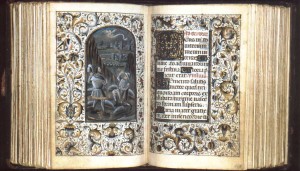
One Deborah Thorpe, a research fellow out of the University of York purports the theory that the strange designs and drawings were the work of two or more children across the years. In addition to texts and diagrams, several pages of the text include ink drawings of humanoid creatures adorned with horns, big heads, and long spindly legs. It is likely these particular drawings were intended to represent demons or the Devil.
Also present were drawings to indicate more developed minds, such as a drawing of what Thorpe guesses to be a cow tethered and led by an approximate to a person. Thorpe’s analysis and assessment of the drawings has been aided by the observations and judgments by a developmental child psychologist. In fact, thanks to the psychologist’ contributions, Thorpe could assert that children of different ages in fact collaborated on this particular drawing, and possibly others.
Thorpe herself had found the drawings by chance whilst perusing through an online database of medieval texts for an unrelated project.
Thorpe was able to partially trace the journey of the manuscript and some of its owners, including thieves, an Italian convent, and a Dominican friar Umilis of Gubbio who is very late on returning the text to said convent since formally borrowing it.
Thorpe’s observations and theories bring to light and oft unconsidered hazard regarding old historical texts. Most of the time, when it comes to storing and keeping historical texts, scholars worry most about rot, dampness, fires, and even vandals. Rarely did collectors and owners seem to consider the possible damage wrought by their bored children or students.
You can find the original article here.
Please make sure to check out the Xlibris Publishing site for more advice and blogs, and be sure to follow us on Xlibris Publishing Facebook and Xlibris Publishing Twitter.