

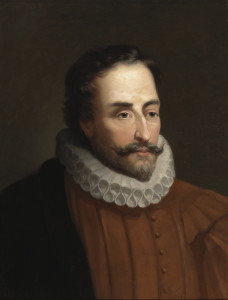
In 2015 the grave and body of Miguel de Cervantes, the author of Don Quixote, was buried deep beneath a 17th century convent in Madrid, Spain. In addition to a coffin fragment bearing the initials ‘MC,’ forensic anthropology helped to identify the remains of Cervantes. Said remains were distinguishable for a flayed rib and a crippled left arm, injuries Cervantes was noted to have taken in the Battle of Lepanto.
For the 400th year anniversary celebrating the life, works, and death of Miguel de Cervantes, BBC writer Fiona Macdonald makes the argument of how Cervantes’ experiences as a prisoner shaped him into the writer whom the world remembers. She bases her argument on the testimonies and experiences of other writers who experienced similar traumas in captivity.
Perhaps unknown to many, Miguel de Cervantes spent five years as a slave in Algiers, having been captured by Barbary pirates following military campaigns against the Turks in 1575. Cervantes would not know freedom until five years had passed, his ransom raised and paid by Trinitarian friars. These friars were attached to the same convent underneath which Cervantes was buried. It is after this escape from captivity and slavery that Cervantes would go on to become the writer he is known today.
Cervantes scholar Maria Antonia Garces argues that Cervantes experience as a captive marked him in ways he expressed in his writings. The works that especially reflect his traumatic experience include Life in Algiers, La Galatea, and the posthumous novel The Trials of Persiles and Sigismunda. Other writers, including Garces, seem to corroborate this idea due to their own experiences as captives, followed by a need to share their ordeals through writing as Cervantes might have done. And incarceration need not refer to physical incarceration.
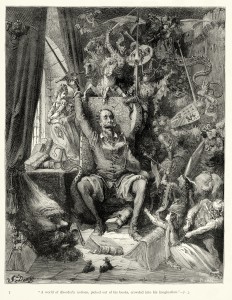
Cervantes’ most famous character, Don Quixote, is a prisoner of his mind. The character is trapped in his delusions, his own mind and imagination his captors.
If you wish learn more, please go to the BBC Culture article here.
Please make sure to check out the Xlibris Publishing site for more advice and blogs, and be sure to follow us on Xlibris Publishing Facebook and Xlibris Publishing Twitter.