

Since the earliest folk-tales, myths, and legends, humanity has loved and lauded its heroes while it feared and loathed its villains. From Gilgamesh and Ishtar to Harry Potter and Voldemort, heroes and villains have portrayed the best and worst of humanity, and not always respectively. People come in all varieties, we are infinite in our complexities, and what are heroes and villains but distillations of those complexities? What makes a character the hero? What makes another the villain? What roles do they play in their respective stories? These are the questions Xlibris Publishing seeks to answer in the near future with Heroes and Villains.
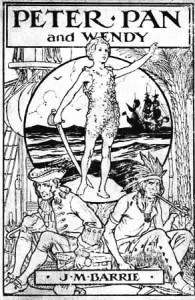
Heroes and Villains is a series that will examine characters from across literature, some well-known and some not, all either a hero or a villain. We will try to follow a formula, not strictly but close enough to provide a consistent structure to examine these characters. As a brief example we will use Peter Pan, from J.M. Barrie’s Peter Pan, Or The Boy Who Wouldn’t Grow Up (1911). When the series really begins we will go more in-depth.
‘Who is the character?’ seeks to answer the identity of the character in the context of their story. The subject will either be the ‘hero,’ the central protagonist of a story, or the villain, the primary antagonist of a story.
Who is Peter Pan? He is a magical, flying boy who never grows up, has adventures with his Lost Boys, calls Neverland his home, a regularly gets into fights with a pirate named Captain Hook.
‘What does the character do?’ is fairly straight-forward. People are judged by their actions, so in the contexts of their stories we will examine what the characters have done that has marked them as ‘heroes’ or as ‘villains.’ Hercules did his Twelve Labors. Baba Yaga devoured children.
What does Peter Pan do? He persuades Wendy and her brothers to embark on an adventure with him to Neverland, showing them wonders and dangers.
‘Why does the character do things?’ Intent is also important. Knowing the reasons behind a character’s actions is vital to understanding that character. Answering the ‘Why’ is how authors have added depth to both heroes and villains. Why does Gawain ride to die at the Green Knight’s axe? Because Gawain is a knight and he made a promise. Why does Javert pursue Jean Valjean without end? Because Javert serves the law and he believes Jean Valjean is a criminal.
Why does Peter Pan do what he does? Peter sees childhood as a fun-filled, thrilling adventure he never wants to end. When Peter Pan is not having fun he is trying to make sure his fun lasts forever.
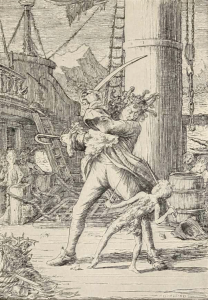
‘How does the character struggle?’ Many characters have their own personal flaws and demons. In dealing with these flaws characters either grow or fall. Sometimes the hero’s flaws are their ultimate downfall, such as Lancelot’s love for the married Guinevere. And sometimes a villain can become redeemed by overcoming their flaws as Darth Vader did, destroying the Emperor to save his son Luke Skywalker.
How does Peter Pan struggle? Peter is tempted do grow up as Wendy will. This temptation becomes a source of argument between Peter and Wendy.
XLibris Publishing hopes to embark on an interesting and informative journey with the heroes and villains we love and hate.
Please make sure to check out the Xlibris Publishing site for more advice and blogs, and be sure to follow us on Xlibris Publishing Facebook and Xlibris Publishing Twitter.
By Ian Smith