

Xlibris Publishing returns with part 2 of Heroes and Villains: Inspector Javert.
Why does Javert do what he does?
The author, Victor Hugo, has described Javert as an ultimately tragic figure. Javert’s aggressive and even destructive pursuit of Jean Valjean is not sourced in malice but in qualities that together can be admirable in moderation but villainous in excess — the two qualities being ‘respect for authority’ and ‘hatred for rebellion.’ Javert is a fanatic, simply to law instead of to religion. Early in the story, believing he incorrectly accused Jean Valjean to have been a former convict, Javert offered his resignation to Jean Valjean.
How does Javert struggle?
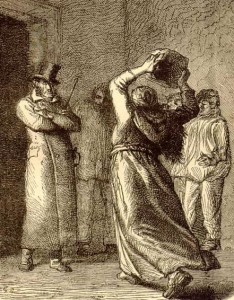
One could liken Javert to iron: strong and unwavering under pressure. But when put under too much pressure, iron does not bend, it breaks. And that is exactly what happens to Javert. The inspector’s steadfast belief that obedience to the law means goodness of character drives his pursuit of Jean Valjean. But when Javert faces incontrovertible proof of his foe’s morality and decency, his mind and soul cannot bear it. The very foundations by which he had built and guided his life were proven wrong. And so Javert commits suicide by drowning himself in a river.
Conclusion
Was Javert evil? That is a difficult question to answer. Rarely does evil see it itself as evil, usually blinded by selfishness and self-centeredness. Javert did not act out of a sense of self-service, but out of loyalty to the law and the worldview that the law and the law alone determined rightness in the world. When he thought he had done wrong by his duties he immediately attempted to resign, fully believing it was the right thing to do. Perhaps he was too merciless and aggressive in pursuing Jean Valjean, yet after the former convict saved Javert’s life and when the life of a young man was in danger, Javert helped them both. The ultimate tragedy of Javert is that he believed he was doing the right thing, and that in another life or story, with only slight differences, he and Jean Valjean could have been friends instead of enemies.
Please make sure to check out the Xlibris Publishing site for more advice and blogs, and be sure to follow us on Xlibris Publishing Facebook and Xlibris Publishing Twitter.
By Ian Smith