

You’ve more than likely heard of George Washington, the First President of the United States. But did you know there were other presidents before him? George Washington became the first president under the US Constitution in 1789, but prior to the Constitution’s ratification the newly independent states operated under the Articles of Confederation. Under the Articles the United States had multiple presidents. This 4th of July, Xlibris wants to remember the first eight presidents of United States of America before George Washington.
Until the formulation of the US Constitution, it was the Articles of Confederation that provided the legal framework for the 13 States to exist as a single country since 1781. The functions of the Articles include formally establishing the alliance between the 13 States, laying out the roles of Congress in administering the needs of the country, and defining the office of president. The position of president under the Articles is very different from that of the Constitution. The writers of the Articles feared placing too much power in one person (such as with a king or a tyrant). As such the office president was made limited in power and authority, lacking even pay or salary.

Under the Articles the president primarily served to preside over meetings, handle various state correspondences, and sign official congressional documents. The first of these Pre-Constitution United States Presidents was John Hanson from Maryland. His term went from 1781 to 1782. Realizing how little power the position had, Hanson attempted to refuse, but as successor could not be found he relented and accepted the position. As the first full-term president under the Articles of Confederation, John Hanson oversaw the government’s formation of some key staples for the young nation, such as what would become the U.S. Post Office and the National Bank. Granted, Hanson’s actual contributions to these institutions were limited to none due to the lack of any real power to his position.
Elias Boudinot of New Jersey served as the second president under the Articles, from 1782 to 1783. Boudinot’s presidency coincided with the end of the American Revolutionary War, presiding over the country during the signing of the 1783 Treaty of Paris. Boudinot advocated for the rights of Native Americans and black people, as well as personally sponsoring youths from both groups to receive an education.
Boudinot was followed by Thomas Mifflin, from 1784-1785. Mifflin had served under George Washington during the American Revolution. As a president under the Articles, Mifflin oversaw the ratification of the Treaty of Paris.
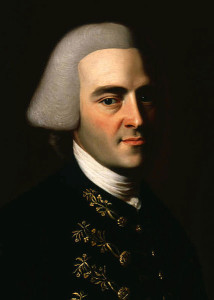
Among the more famous individuals to serve as president under the Articles was John Hancock, from 1785-1786. Most famous for his large signature placed upon the Declaration of Independence, Hancock’s tenure as president was but one middle-step, in a long career in American politics.
Nathaniel Gorham followed after John Hancock, in a tenure lasting from 1786 to 1787. Like John Hancock, Gorham’s tenure as a president under the Articles was but one item on a sizable list of political achievements. Over his political career Gorham had served as a notary, a member of legislature, and a judge.
From 1787 to 1788, Arthur St. Clair of Ohio served as president under the Articles of Confederation. Upon finishing his term Arthur St. Clair left to Congress and was appointed governor of the Northwest Territory. There Arthur would often be in conflict with the local Native American tribes, who claimed to be the true owners of the land. Ultimately Arthur St. Clair died destitute, giving away what little was left upon his death.

The final and eighth president, 1788 to 1789, to serve under the Articles of Confederation was one Cyrus Griffin of Virginia. Having a background in Law, Cyrus Griffin went on to lay the foundation for what would today be recognized as the modern court system. Even after his tenure as president, he worked to contribute and advance the United States court systems, going on to become judge in the District of Virginia.
The original article can be found here.
Please make sure to check out the Xlibris Publishing site for more advice and blogs, and be sure to follow us on Xlibris Publishing Facebook and Xlibris Publishing Twitter.